Born to Be Free Raised to Be Feral SVG Review
I have spent years evaluating digital assets for real-world embroidery applications, and I know that a pretty picture on a screen does not always translate to a successful stitched product. When I first encountered the Born to Be Free Raised to Be Feral SVG, my initial reaction was one of cautious optimism. The concept of a playful cowboy raccoon is undeniably charming, but as an experienced designer, my mind immediately went to the practicalities: How will this stitch? Will the details hold up on a busy fabric? And most importantly, does it work for a commercial project or just a quick hobbyist craft?
This review is not about listing file formats or claiming it works on every machine in existence. Instead, I am sharing a professional perspective on how this specific design behaves when moved from a digital workspace to a physical hoop. If you are an Etsy seller, a boutique owner, or a crafter looking to create a high-quality finished product, here is what you need to know before you press "start" on your machine.
The First Impression: Mood and Visual Personality
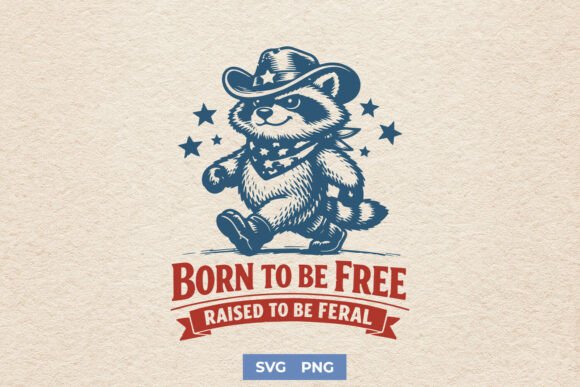
The moment you open the file, the personality of the Born to Be Free Raised to Be Feral SVG jumps out. It captures a distinct Western Americana vibe that feels both nostalgic and modern. The typography suggests a rugged independence, while the imagery of a raccoon in cowboy gear adds a layer of whimsy that softens the overall aesthetic. This balance is crucial for handmade products because it allows the item to appeal to a broad audience without feeling too niche or too generic.
In terms of layout, the design feels balanced and ready for digitization. The visual weight is distributed well, suggesting that the final embroidered piece will sit comfortably on a chest pocket or centered on a tote bag. However, the playful nature of the subject matter means that the stitching needs to be executed with care. A sloppy satin stitch could make the raccoon look messy rather than cute, which would undermine the quality of the entire project. For a holiday embroidery project like Independence Day, this design offers a fresh alternative to the standard stars and stripes, making it a strong contender for unique merchandise.
Real-World Application: From Screen to Stitch
Let's imagine a scenario where I am preparing a custom order for a local boutique. The client wants a line of 4th of July sweatshirts featuring this exact motif. My first step is to visualize the finished product. On a heavy cotton sweatshirt, the Born to Be Free Raised to Be Feral SVG would likely perform very well. The texture of the fleece provides enough stability to support a decent amount of fill stitch, allowing the cowboy hat and the raccoon's features to pop.
I would also consider using this design for a baby item, such as a onesie or a bib. The theme of being "raised to be feral" fits perfectly with the idea of raising a little wild child. In this context, the design serves as a personalized gift that parents can give with pride. The contrast between the text and the graphic creates a narrative that resonates with families who love the outdoors and western culture. However, for baby items, I would advise reducing the size slightly to ensure the stitching doesn't feel too stiff against delicate skin.
For a small business owner selling on platforms like Etsy, this design has significant potential. It is versatile enough to be adapted into a printable mockup for a digital listing or used as a physical asset for a handmade product. Whether it ends up on an apron for a BBQ enthusiast or a kitchen towel for a home cook, the design acts as a conversation starter. Customers appreciate designs that tell a story, and this one tells a clear tale of freedom and fun.
Where Caution is Required
While the design is promising, there are specific scenarios where the Born to Be Free Raised to Be Feral SVG might present challenges. One of the primary concerns is the use of small hoop sizes. If you attempt to stitch this on a tiny patch or a very small cap front, the intricate details of the raccoon's face may get lost in the thread density. Tiny lettering can also become illegible if the stitch count is too high relative to the space available.
Fabric choice plays a massive role in the success of this project. Textured fabrics, such as bouclé or heavy corduroy, can distort the shape of the design, making the straight lines of the text wobble and the curves of the character appear uneven. Similarly, stretchy fabrics like jersey require a stabilizer that is robust enough to prevent puckering. Without proper stabilization, the tension of the machine can pull the fabric, ruining the alignment of the text and the image.
Dense stitch areas are another point of consideration. If the design includes large blocks of fill stitch, it might feel too rigid for certain garments like pillow covers or tea towels, which benefit from a lighter touch. Furthermore, dark fabrics require careful thread color selection. While white or light threads offer high contrast, they may show dirt quickly on a frequently washed item like a work apron. You must weigh the visual impact against the longevity of the finished product.
Impact on Product Value and Brand Consistency
Using a well-executed design like this directly influences customer trust and brand perception. A clean, sharp embroidery job signals professionalism and attention to detail. When a buyer receives a tote bag or a sweatshirt with the Born to Be Free Raised to Be Feral SVG stitched clearly, they perceive the value of the item to be higher. Conversely, skipped stitches or loose threads can lead to returns and negative reviews, regardless of how cute the original graphic was.
For a craft business, consistency is key. If you plan to sell multiple items featuring this design, ensuring that the stitch density and thread colors remain consistent across different batches is essential for maintaining a cohesive brand identity. The design should enhance the handmade presentation, making each item feel special and thoughtfully crafted. It is not just a sticker; it is an integral part of the garment's texture and feel.
Practical Designer Notes for Execution
Before committing to a full production run, I strongly recommend testing the design on scrap fabric first. This simple step allows you to check thread color contrast and review the stitch density under actual lighting conditions. Always confirm the recommended hoop size for the specific garment you are working on to avoid distortion.
If you are unsure about the file specifications, take the time to inspect the small details in the vector file. Ensure that the paths are closed and that there are no stray points that could cause the machine to skip. Testing the design in black and white mockups can also help you visualize how the contrast will look on different fabric backgrounds. Use a proper stabilizer appropriate for the fabric type—cut-away for stable items and tear-away for lightweight projects—to ensure the design holds its shape over time.
Finally, remember to check whether the design works for both personal and commercial projects. Licensing terms vary, and if you intend to sell finished items or digital products, you must confirm that you have the right to do so. By following these practical steps, you can transform the Born to Be Free Raised to Be Feral SVG from a simple digital file into a high-quality, market-ready embroidery project that delights customers and supports your creative business goals.